What happened to KIND?
The Kansas Dental Association previously had a student scholarship known as KIND. Beginning Fall 2026, the KDA will have a new student funding program known as the Kansas Rural Health Transformation Dental Award Program.
About the Program
Established in 2026, the Kansas Dental Association (KDA) and Kansas Department of Health and Environment (KDHE) have partnered together to offer the Kansas Rural Health Transformation Dental Award Program (RHTP) to both dental and dental hygiene students that want to work in Kansas.
Dental Student
Dental education award for up to $50,000 per year
A dental student is eligible to apply for the KDHE Scholarship each year and, as such, it is possible to receive up to $200,000 in total scholarship assistance. In return, the student commits to practicing dentistry in a rural area for a period of time determined by the Kansas Dental Association.
Dental Hygiene Student
Dental education award for up to $10,000 per year
A dental hygiene student is eligible to apply for the RHTP dental education award each year and, as such, it is possible to receive up to $40,000 in total. In return, the student commits to practicing dental hygiene in a rural area for a period of time determined by the Kansas Dental Association.
Your Application Should Include
- Letter of interest
- Resume
- Dental Practice, future plans
- Short essay on your commitment to practicing in rural Kansas (500 words or less)
- Three (3) letters of reference
The deadline for applications for both a dental student and dental hygiene student is yet to be determined at this time of publication (November 18, 2026). A deadline will be announced as soon as it is available.
KIND Application
Frequently Asked Questions
Who can apply?
D1 through D4 students are encouraged to apply every year.
How often should I apply?
Applicants need to reapply every year to be awarded a one (1) year scholarship.
If awarded the scholarship, what is the service rate?
The first (1st) year of scholarship equals two (2) year of service. After that, the next year will be year for year.
Do doctors choose which county they serve?
Yes, as long as the doctor works in a county that is considered rural.
Would applicants work as Associates in already established practices?
It is up to the applicant to find employment.
What does a competitive application look like?
The KIND grant favors applicants who apply to "more rural " areas. The KIND grant also favors applicants who are going into private practices.
"More rural" can be considered western Kansas but any applicant choosing to work in a participating rural county is encouraged to apply.
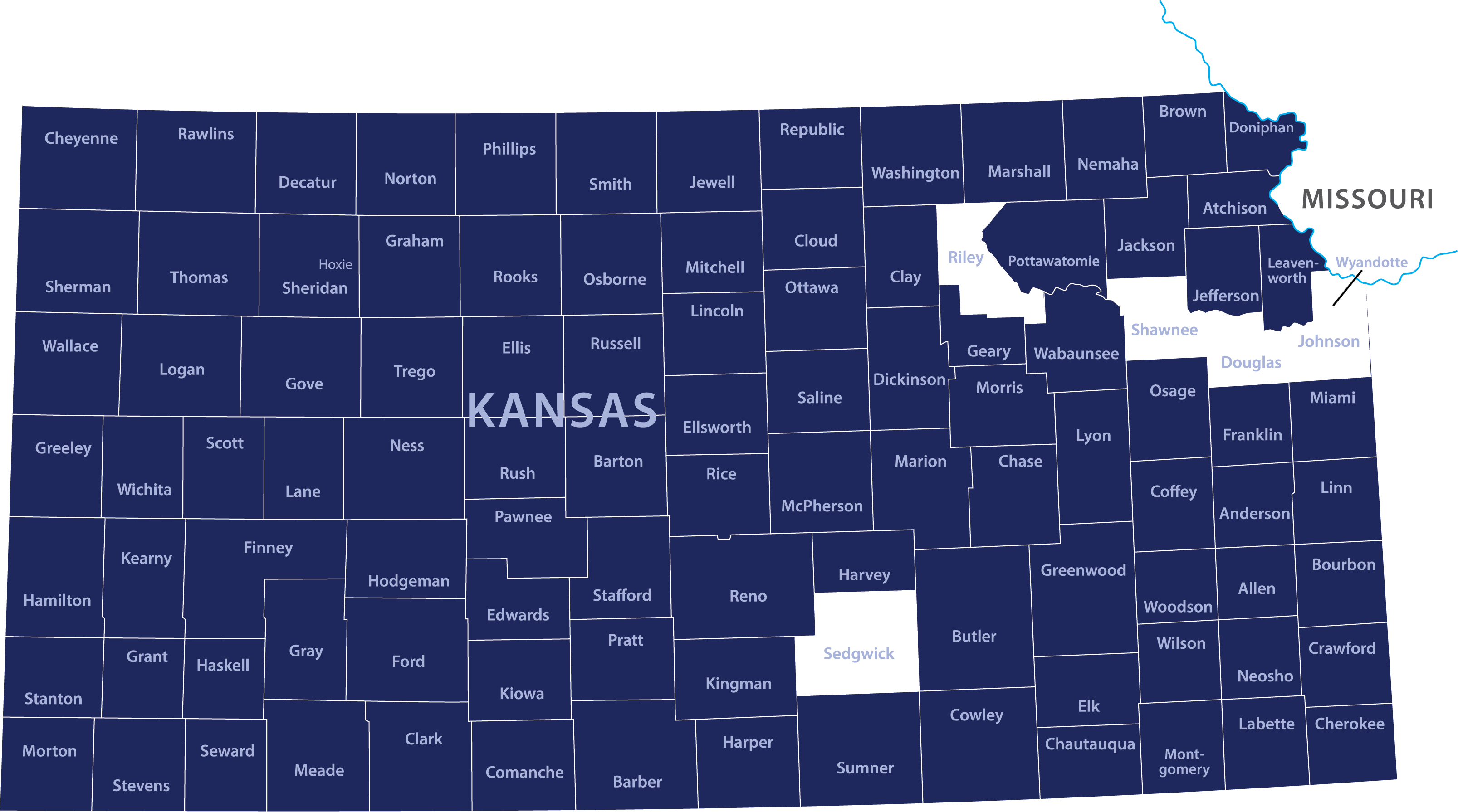
Which counties are considered rural?
Allen
Anderson
Atchison
Barber
Barton
Bourbon
Brown
Butler
Chase
Chautauqua
Cherokee
Cheyenne
Clark
Clay
Cloud
Coffey
Comanche
Cowley
Crawford
Crawford
Decatur
Dickinson
Doniphan
Edwards
Elk
Ellis
Ellsworth
Finney
Finney
Ford
Franklin
Geary
Gove
Graham
Grant
Gray
Greeley
Greenwood
Hamilton
Harper
Harvey
Haskell
Hodgeman
Jefferson
Jewell
Kearny
Kingman
Kiowa
Labette
Lane
Lincoln
Linn
Logan
Lyon
Lyon
Marion
Marshall
McPherson
Meade
Meaha
Miami
Mitchell
Montgomery
Morris
Morton
Neosho
Ness
Norton
Osage
Osborne
Ottawa
Pawnee
Phillips
Pottawatomie
Pratt
Rawlings
Reno
Republic
Rice
Rooks
Rush
Russell
Saline
Seward
Sherman
Smith
Stanton
Stevens
Sumner
Thomas
Trego
Wabaunsee
Wallace
Washington
Wichita
Wilson
Woodson
Which counties are considered non-rural?
Douglas
Johnson
Riley
Sedgwick
Shawnee
Wyandotte